Introduction
to the Tata Trusts
Know the
work we do
Discover our impact
stories and campaigns
Publications
and reports
In the media
Opportunities
for impact




City belongs as much to those who live
and work in it as to those who influence it
Once viewed primarily as a rural nation, India is urbanising rapidly becoming an urban one. Cities are now home to 45% of the world's population, and India is undergoing one of the world's largest urban transitions. According to the UN's World Urbanization Prospects 2025, India will drive a significant share of global urban growth through 2050, making the way its cities evolve critical for both national development and wider climate and sustainability goals.
Yet urbanisation does not automatically create inclusion. Cities have often grown faster than the systems designed to support them, and for many communities, opportunity and vulnerability arrive together. However, through robust systems, inclusive planning and resilient urban services, cities can become engines of opportunity and well-being.
Internal migrants, informal workers, women, youth and other marginalised populations often face insecure housing, fragile livelihoods and limited access to basic services and support systems. Even where incomes are higher, the cost and risks of urban life can deepen vulnerabilities. Additionally, climate risks such as extreme heat, flooding and poor air quality are intensifying existing pressures with disproportionate impact on the urban poor. The geography of urban poverty is also shifting. Much of India's urban growth is taking place in smaller towns.
For over two decades, the Tata Trusts have worked within this complexity as an enabler, partnering with communities, civil society organisations, academic institutions, and governments to develop and demonstrate scalable solutions that improve resilience and quality of life for urban low-income communities. Through this work, we also contribute to broader Sustainable Development Goals on poverty reduction, health, clean water, reduced inequalities and sustainable urban development.

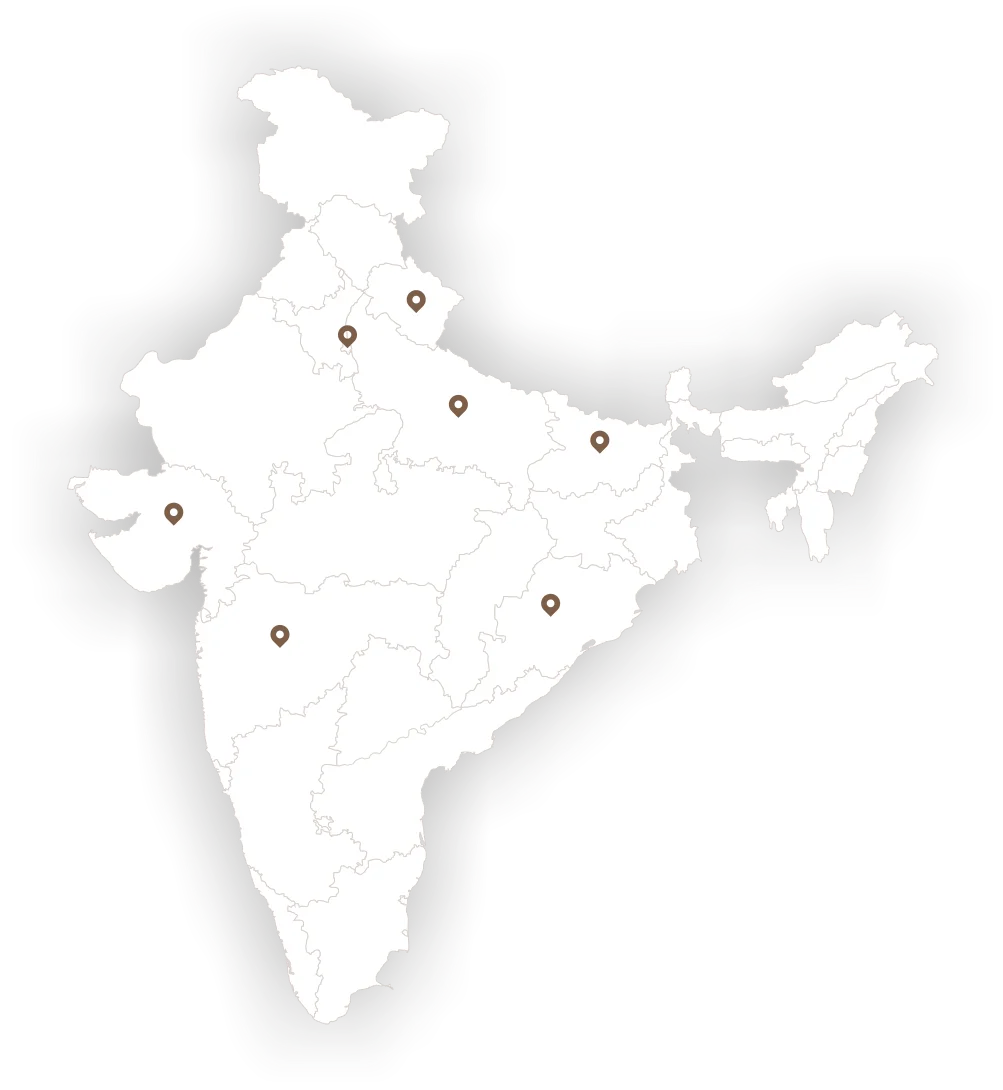
(Bihar, Delhi NCR, Gujarat, Maharashtra, Odisha,Uttarakhand and Uttar Pradesh)


(including households covered through mapping, assessments and city-level action plans)
Addressing urban poverty requires responding to multiple, interconnected realities:

Urban poverty manifests across three interconnected dimensions: economic, social, and spatial. Informal employment and limited access to credit constrain financial stability. Social exclusion cuts migrants, women, and marginalised groups off from services and representation. Spatial deprivation, whether in informal settlements or hazardous locations, exposes communities to environmental risks and displacement. Each dimension reinforces the others, making poverty harder to escape.
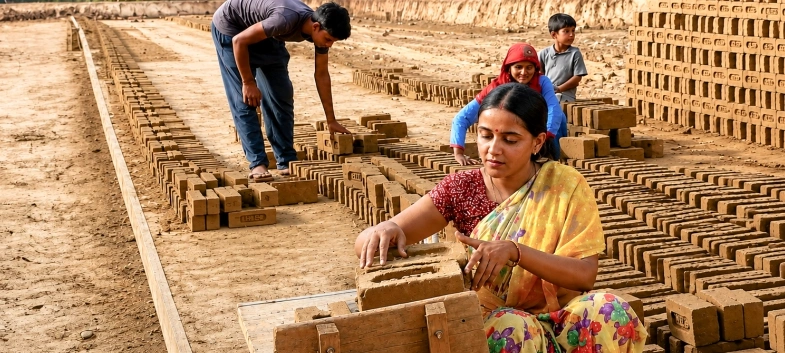
Nearly 80–90% of India's urban workforce is employed informally without job security or access to benefits in times of crisis. Migrants, gig workers, street vendors, construction workers, domestic workers, and sanitation workers form the backbone of city economies while remaining largely invisible to the systems designed to support them.
Climate change is increasingly intersecting with urban poverty. Extreme heat events are becoming more frequent and severe, amplified by urban heat islands created through expanding concrete and shrinking green cover. The loss of natural drainage systems is worsening urban flooding, while over-extraction is accelerating groundwater depletion. Air quality emergencies disrupt livelihoods and affect health and well-being. Any gains in income or housing are often rapidly erased by a single climate event.
India's rapid urbanisation includes large numbers of census towns, places that function as urban spaces but are administered as rural panchayats. The resulting governance mismatch creates gaps in service delivery, infrastructure planning, and welfare schemes access precisely where the need is greatest.
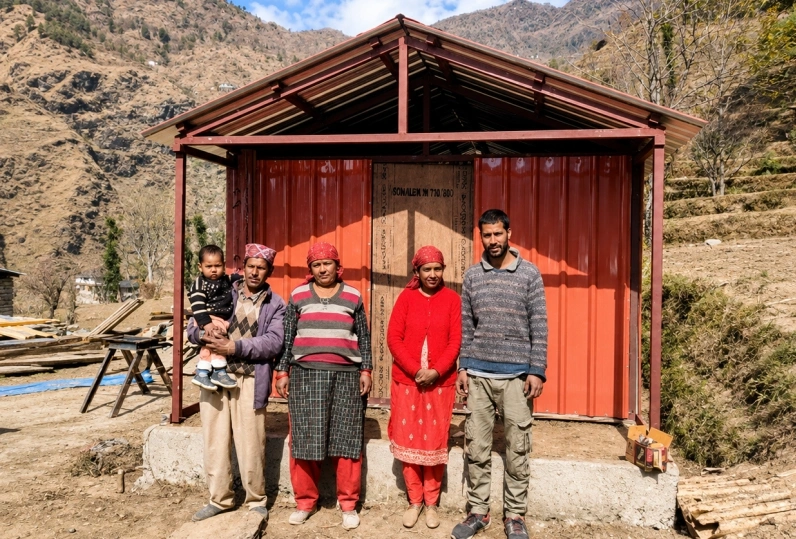
Urban poverty cannot be addressed in silos. The Tata Trusts work through integrated approaches that connect basic services, secure habitats and resilient livelihoods, recognising that progress in one area often strengthens outcomes in another. This integrated approach is anchored in strengthening livelihoods and social protection so that informal workers, migrants and women can access economic opportunities. It also builds resilience through practical, nature-based solutions that drive improvements in housing, habitat, water and other services, and promotes responsible waste stewardship through decentralised waste management.
Working with communities, governments, civil society organisations and knowledge partners, the Trusts strengthen local systems, demonstrate solutions that can be scaled, and generate evidence that informs policy and practice.
Our key priority areas are:
We measure success not only by scale, but also through the resilience and quality of life that communities are able to build over time. Through our work, we drive outcomes that focus on:

Improved access to basic services, stronger social protection and greater resilience against economic and climate-related shocks.

Improved access to welfare schemes, workforce opportunities, alongside stronger support systems that strengthen livelihoods and enable economic participation. This includes enabling systems such as childcare and community-based support that make workforce participation possible for women and caregivers.

Reduced environmental stress by enabling liveable environments through nature-based climate interventions that address urban heat, restore water bodies, improve groundwater recharge and reduce flood risk. Facilitating cleaner rivers through decentralised waste management and reduced waste entering water systems.

Scalable models that strengthen planning, improve service delivery and enable more inclusive urban development.
Our geographic footprint continues to evolve as existing programmes deepen and new partnerships emerge.