Introduction
to the Tata Trusts
Know the
work we do
Discover our impact
stories and campaigns
Publications
and reports
In the media
Opportunities
for impact





Institutions that create possibilities for generations
Some institutions respond to the needs of their time. Others shape the course of a nation by creating the foundations on which its future is built.
At the Tata Trusts, institution-building reflects a belief that lasting progress comes from creating organisations that can evolve with the emerging national priorities and contribute to society across generations.
which led to the establishment of the Indian Institute of Science (1911) - a world-class institution for scientific research and higher learning in India in the pre-independence era.
The Tata philanthropic legacy was carried forward by successive generations, including Sir Dorabji Tata, Sir Ratan Tata, JRD Tata and Ratan N. Tata, through institution-building and partnerships such as the Tata Institute of Social Sciences (1936), the Tata Memorial Centre (1941), the Tata Institute of Fundamental Research (1945), and the National Centre for the Performing Arts (1969). More recently, the Tata Institute of Genetics and Society (2017) and the Tata Indian Institute of Skills (2024) have contributed to India's progress in science, healthcare, social sciences, culture and public policy.
As the country's priorities develop, the Trusts continue to invest in institutions that expand knowledge, advance innovation and strengthen the systems that influence everyday lives.
India's ambition to become a developed nation by 2047 signals a shift in the nature of its binding constraints. Many challenges of the past, including infrastructure gaps, limited access to services and the need for essential assets, have been addressed at scale through programmes and schemes over recent decades.
The next phase of India's development will increasingly depend on addressing a different class of challenges: complex, interlinked, and long-horizon problems that demand sustained institutional capacity rather than short-term programme interventions. While India must continue expanding access and building physical infrastructure, its future will increasingly depend on institutions that can generate new knowledge, translate research into practice, create economic opportunity and improve public systems.
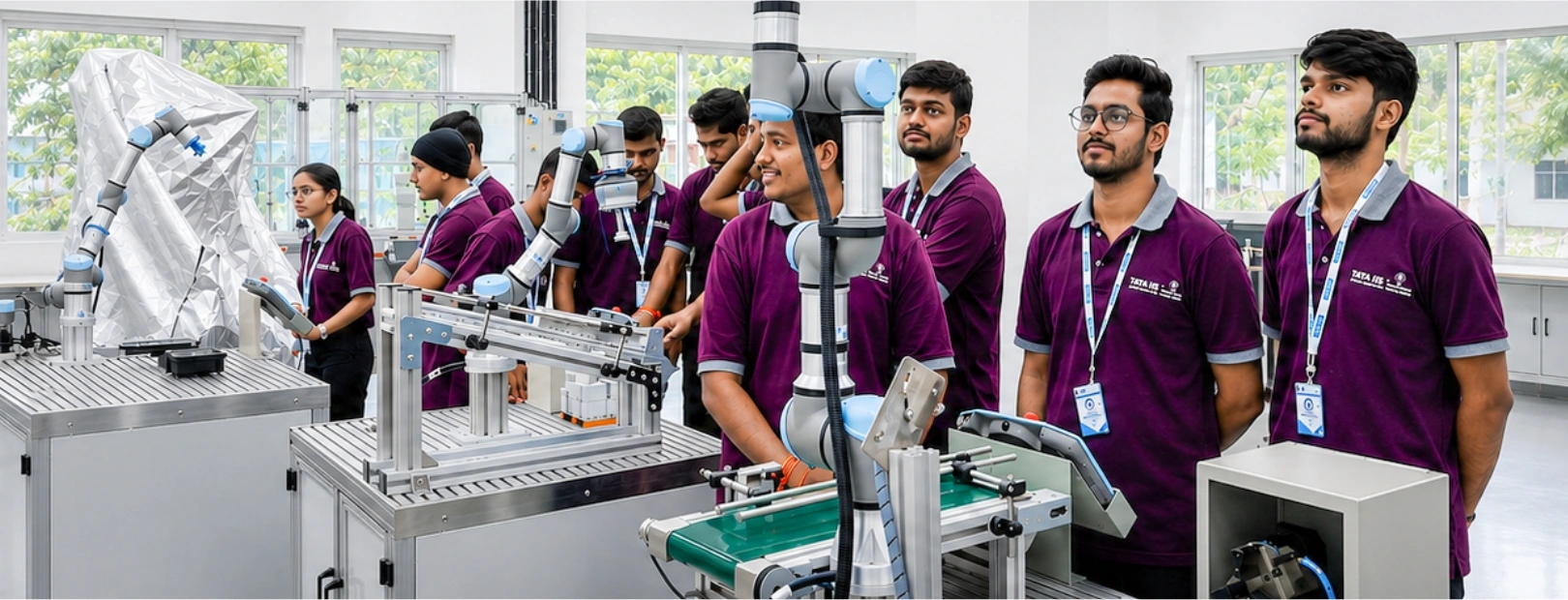
Many of the questions shaping India's future will require sustained attention over decades. Advances in areas such as genomics, climate science, public health and emerging technologies require institutions that can build deep expertise and pursue solutions beyond short-term horizons.
Economic growth and technological change are reshaping the nature of work. Over 80% of India's workforce remains informally employed, a level incompatible with sustained high-income development. In many developed countries, such transitions required large-scale labour migration into formal employment. Sustaining this transition requires stronger connections between education, enterprise and employment so that people can access opportunities aligned with a changing economy.
India has made significant progress in research and innovation. The next challenge is ensuring that research reaches the systems where it can create meaningful change. Institutions that connect research with policy and implementation play an important role in informing policies, improving public services and delivering wider societal benefits.
For most people, the experience of development is shaped by the organisations they interact with every day. Schools, healthcare facilities, local governments, courts and community organisations influence how public services are delivered and how trust is built. Improving their effectiveness is essential to ensuring that development reaches communities across the country.
Institutions are built over decades. Their value lies in the role they continue to play long after they are established. Creating institutions with that kind of enduring relevance calls for patient capital, strong leadership and the confidence to invest in ideas that may take years to realise their full potential.
The Tata Trusts remain engaged beyond the point of establishment, supporting organisations as they develop the ability to fulfil their purpose independently.
Our work today spans four distinct but connected areas. Together, they enhance the country's ability to advance knowledge, expand economic opportunity and improve the way public institutions serve society.
Our key priorities are:
The institutions backed by the Tata Trusts have contributed to India's development by expanding knowledge, enabling innovation and addressing challenges that affect society.

Invested in institutions that have furthered scientific discovery and developed specialised expertise across generations. The Indian Institute of Science (IISc) has advanced research and scientific education across disciplines, while the Tata Institute of Fundamental Research (TIFR) has contributed to India's progress in areas such as nuclear science, astronomy, mathematics and computing. The Tata Institute for Genetics and Society (TIGS) is advancing expertise in genomics and biotechnology to address future challenges in health and society.

Established platforms that have brought together specialised expertise and care to address critical health needs. The Tata Memorial Centre transformed cancer care in India by bringing treatment, research and training together under one institution, expanding access to specialised care and strengthening the country's oncology ecosystem. The Samvidhaan Fellowship, an initiative under Nyaaya, supports a network of grassroots lawyers in Karnataka and Bihar to address the gaps in access to justice.

Invested in organisations that have shaped approaches to social development through research and practice. The Tata Institute of Social Sciences (TISS) has contributed to social development in India by preparing professionals and generating ideas that inform work across communities and public systems. The Tata Centre for Development at the University of Chicago has further strengthened evidence-based approaches by connecting research with development practice.

Enabled centres that help move ideas from laboratories into applications that address real-world needs. The Tata Center at MIT and the Tata Centre for Technology and Design have developed solutions focused on challenges faced by communities, translating innovation into practical outcomes.

Created platforms that encourage organisations to use technology more effectively to improve their work. The Tech4Good Community supports non-profits and social organisations in adopting digital tools and strengthening their capabilities, helping them improve the way they serve communities.

Nurtured centres that preserve and celebrate India's cultural heritage. The National Centre for the Performing Arts (NCPA) has created a platform that enables artists, researchers and audiences to engage with India's diverse performing arts traditions.
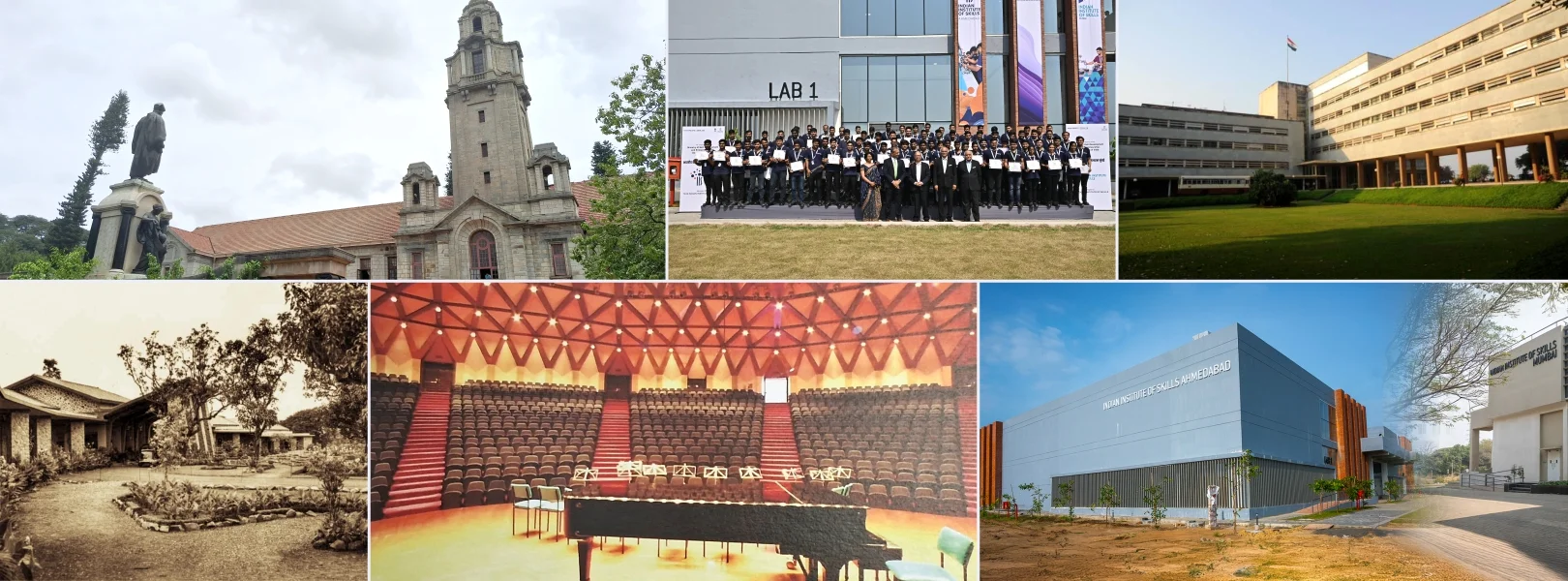
Over the years, the Tata Trusts have helped establish and develop a diverse network of institutions across India, including universities, research centres, field organisations and centres of excellence. This ecosystem has expanded through long-term partnerships with governments, academia and civil society, creating enduring platforms for research, innovation and capability building.