Introduction
to the Tata Trusts
Know the
work we do
Discover our impact
stories and campaigns
Publications
and reports
In the media
Opportunities
for impact






Education is the foundation of an equitable India
Education is one of the most powerful enablers of social and economic progress. It expands opportunity, improves well-being, strengthens participation, and helps shape more equitable and resilient societies. For India, education will play a defining role in its journey towards becoming a Viksit Bharat by 2047.
Yet, disparities in access to quality learning continue to persist, particularly among children from underserved and vulnerable communities.
At the same time, the education landscape is evolving rapidly. National priorities under the National Education Policy (NEP) 2020 have expanded the focus from access to foundational learning, teacher development, experiential learning, digital inclusion, completion of secondary education, and vocational readiness.
The Tata Trusts promote efforts that reinforce inclusive and high-quality education across early childhood, primary school, and secondary education. The approach seeks to enhance learning and opportunities for children while strengthening educational institutions and long-term systemic capacity.

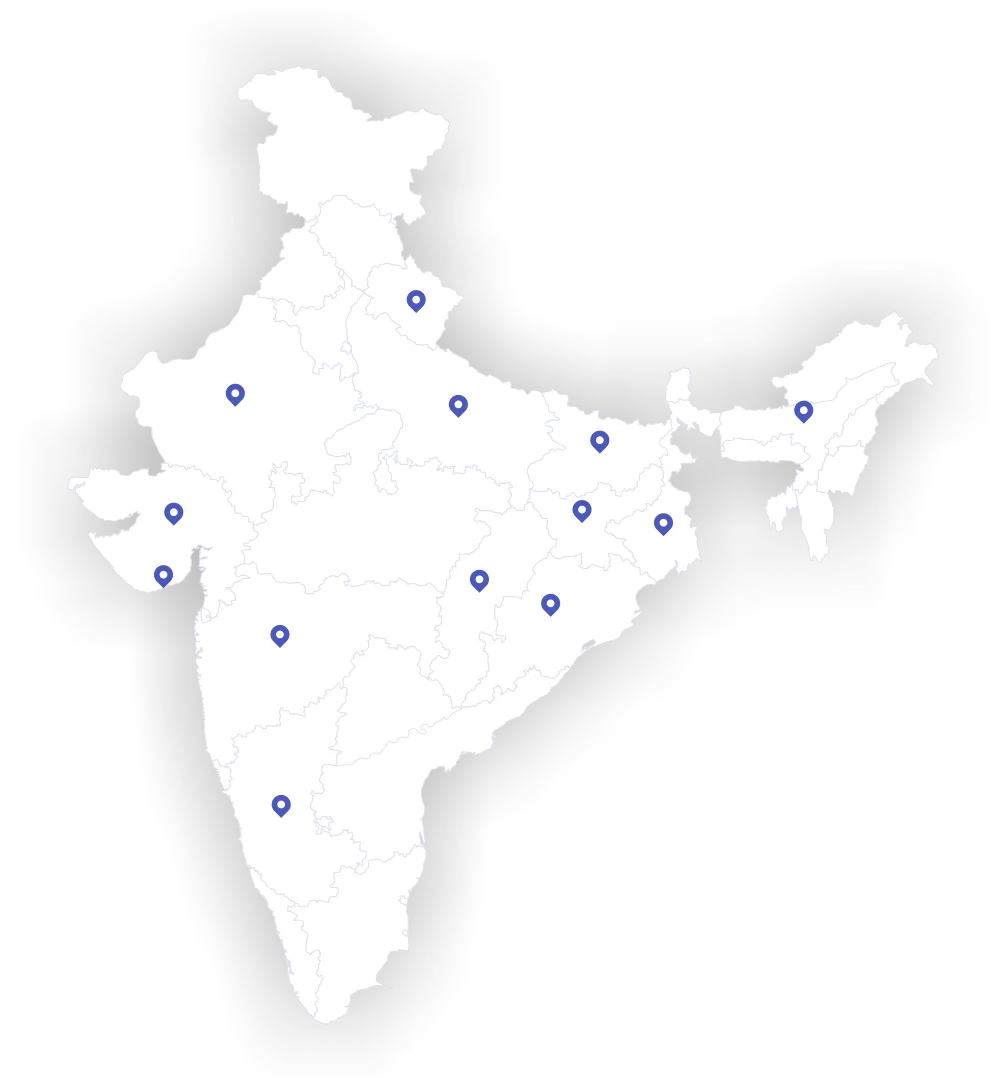
(Assam, Bihar, Chhattisgarh, Daman and Diu (UT), Gujarat, Jharkhand, Karnataka, Maharashtra, Odisha, Rajasthan, Uttarakhand, Uttar Pradesh and West Bengal)

(Students)


(Anganwadi Centres)
Addressing educational inequity in India requires navigating multiple, interconnected challenges:

Despite significant expansion in school access, disparities in educational quality, institutional capacity, teacher support, and learning outcomes continue to persist across regions and socio-economic groups. Lower than recommended investment in school education, lack of reform in pre-service teacher education, and weak academic capacities in the supervisory cadre further affect delivery within public education systems.
Many children continue to struggle with age-appropriate foundational skills in language and mathematics by the end of primary school. The ability to read and write with understanding, thinking and problemsolving are key to succeeding in school. Along with literacy and mathematics, the ability to work in groups, creativity, physical fitness and awareness of the world around, lay the foundations for future learning.
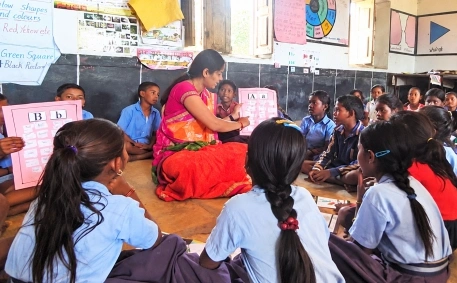
The capacity and motivation of teachers are key to the delivery of quality education. However, teachers often operate within resource-constrained environments with limited access to continuous professional development, contextual pedagogies, and collaborative learning platforms that support effective classroom practices.
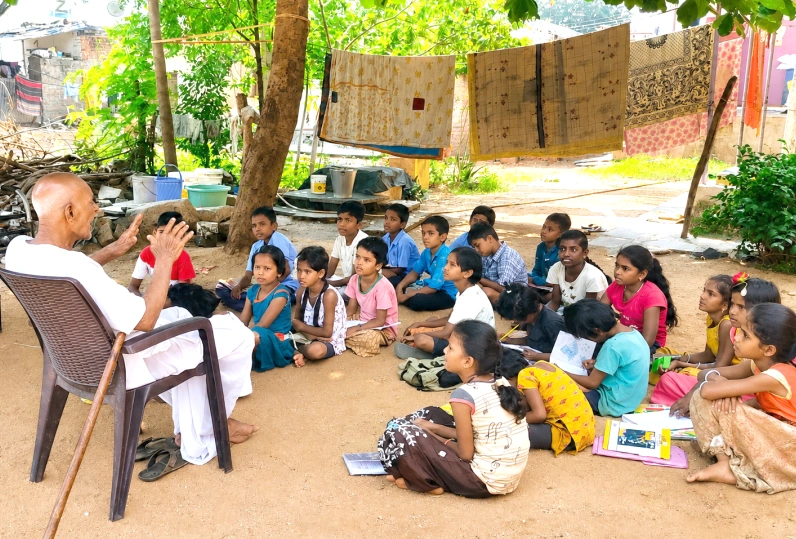
Poverty, social norms, migration, and unequal access to supportive learning ecosystems continue to affect educational participation and continuity, particularly among vulnerable and marginalised communities.
As the education ecosystem evolves, there is a growing need to strengthen secondary education, meaningful use of education technology, vocational readiness, and 21st-century skills such as critical thinking, collaboration, communication and problem-solving.
The Tata Trusts' approach to education is rooted in the belief that improving learning outcomes requires strengthening the broader ecosystem around the child, including educators, institutions, communities, and public systems. Drawing on deep sectoral expertise and long-standing engagement across geographies, the Trusts support scalable approaches that enhance early learning in pre-primary and primary grades, improve educational quality, and enhance institutional capacity. Increasingly, the focus is also expanding towards enabling access to quality secondary education in alignment with the National Education Policy (NEP) 2020 and evolving learning needs.
Recognising India's linguistic diversity, the Tata Trusts also support Mother Tongue-Based Multilingual Education (MTB-MLE) programmes in select geographies. These programmes seek to improve children's motivation, classroom engagement, and academic learning outcomes across both home and school languages, while building teacher capacities for multilingual classrooms and encouraging greater participation of parents and communities in children's schooling. They also build the capabilities of partner organisations to lead and advocate for change.
The Tata Trusts recognise that education outcomes are shaped by multiple interconnected factors that extend beyond the classroom. As a result, programmes are designed using an integrated approach that combines elements of enhancing access to a supportive learning environment, teacher development, system strengthening, which in turn contributes to improved learning practices.
Depending on geography, community context, and local educational realities, each intervention (or Change Engine) draws on multiple principles simultaneously to create more responsive, inclusive, and sustainable learning ecosystems.
Our key priorities are:
We measure success in numbers as well as:

For
young children
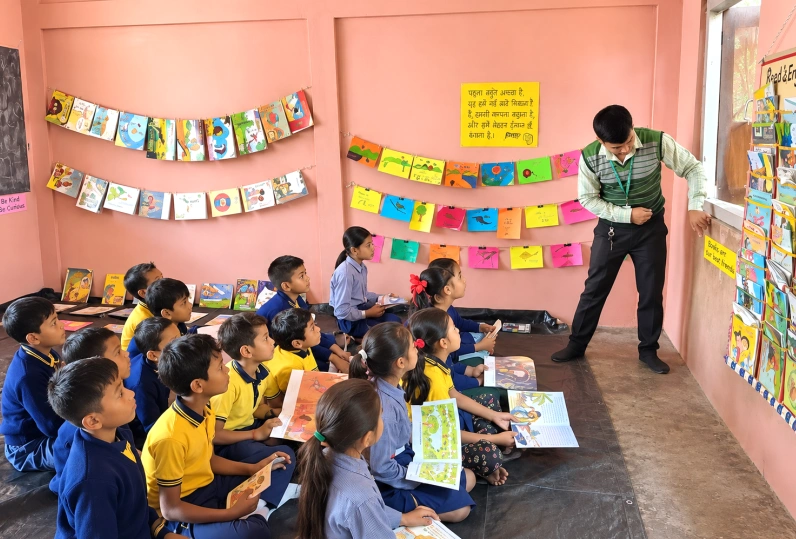
Improved school readiness through play-based Early Childhood Education that develops language and cognitive skills, and socio-emotional and physical development of young children through strengthened Anganwadi systems.

For
students
Improved age- and grade-appropriate learning, stronger critical-thinking skills, creative expression, greater engagement in learning, and increased retention and progression through school.

For
teachers
and educators
Learner-centred teaching practices, improved access to pedagogical resources, stronger professional learning communities, and greater capacity to deliver meaningful and inclusive learning experiences.

For
adolescents
and youth
Improved learning outcomes in secondary education, stronger life skills, increased digital literacy, greater access to vocational and higher education pathways, and improved readiness for future opportunities.

For
education systems
and communities
Stronger public education systems, improved institutional capacities, greater community participation in education, and enhanced adoption of evidence-based approaches across schools and learning ecosystems.

The Trusts' education initiatives support over 21,00,000 students and 75,399 teachers and Anganwadi workers across diverse geographies, with a growing focus on strengthening foundational learning, secondary education, teacher development and system-wide capacity.