Know
Us

Introduction
to the Tata Trusts

Explore
Our Work

Know the
work we do

See
Change Unfold

Discover our impact
stories and campaigns

Discover
Insights

Publications
and reports

Follow
Updates

In the media

Join
Us

Opportunities
for impact

integrated natural resource management banner

Integrated Natural
Resource Management

Climate variability, water stress, land degradation, and biodiversity loss continue to place growing pressure on rural livelihoods, particularly in rain-fed, tribal, and forest-fringe regions. National priorities around water conservation, afforestation, and locally driven resource management underline the need for more integrated and resilient ecosystems.

The Trusts support landscape-level approaches that strengthen the interdependence between land, water, forests, commons, and biodiversity systems. This includes watershed development, low-cost water harvesting structures, groundwater recharge, and improved stewardship of natural resources to enhance water security, landscape restoration, and weather risk preparedness.

The Trusts also support integrated livelihood approaches in forest-fringe communities through sustainable agriculture, community stewardship, and stronger convergence with government programmes and evolving local management systems.
Change Engines

Integrated Natural Resource Management content image

Improving Water
Security and Sustainable
Rural Livelihoods

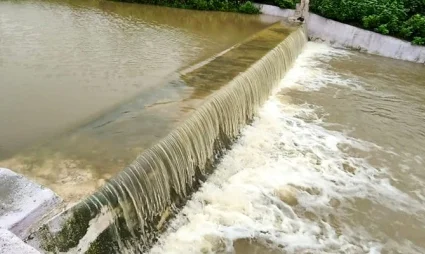
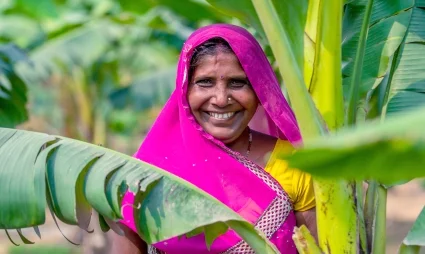
The Tata Trusts’ Integrated Natural Resource Management (INRM) programme supports the creation of low-cost water harvesting and groundwater recharge structures such as farm ponds, dohas, check dams, and contour bunds in rain-fed and water-stressed regions. These interventions address a critical challenge. According to the National Commission on Integrated Water Resources Development (NCIWRD), a significant proportion of India's annual rainfall is lost through evaporation, surface runoff, and difficult terrain, limiting the amount of water available for productive use.
The Tata Trusts’ Integrated Natural Resource Management (INRM) programme supports the creation of low-cost water harvesting and groundwater recharge structures such as farm ponds, dohas, check dams, and contour bunds in rain-fed and water-stressed regions. These interventions address a critical challenge. According to the National Commission on Integrated Water Resources Development (NCIWRD), a significant proportion of India's annual rainfall is lost through evaporation, surface runoff, and difficult terrain, limiting the amount of water available for productive use.

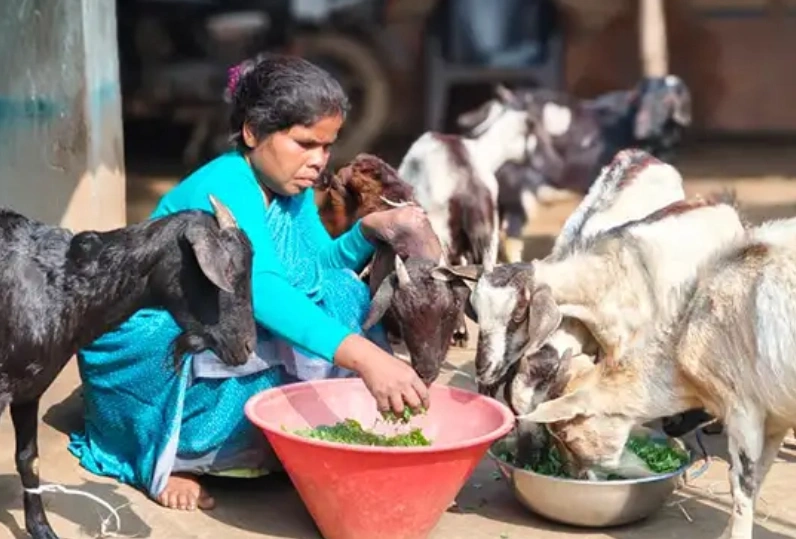
The improved water retention and groundwater recharge help expand irrigated areas, enhance crop productivity, enable additional cropping cycles, and strengthen household incomes. Reliable water access also supports livestock-based livelihoods, particularly for small and marginal households dependent on small ruminants. In addition, the availability of water closer to habitations reduces the burden on women and girls who otherwise spend significant time and effort fetching water for domestic use. To know more about how Tata Trusts is building village community knowledge towards water resource management, Click here.

Integrated Natural Resource Management content image

Bridging Academic
Research and Grassroots
Development

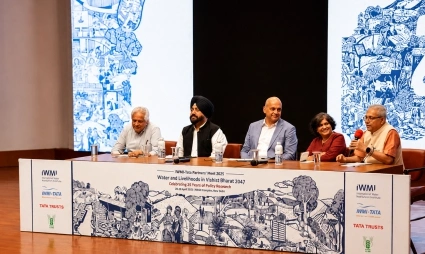
For over two decades, the partnership between the International Water Management Institute, Colombo, and the Tata Trusts, the IWMI-Tata Water Policy Research Programme (ITP) has played a defining role in strengthening India’s water, energy, agriculture, and livelihoods landscape through evidence-based field research, action research and policy engagement.
For over two decades, the partnership between the International Water Management Institute, Colombo, and the Tata Trusts, the IWMI-Tata Water Policy Research Programme (ITP) has played a defining role in strengthening India’s water, energy, agriculture, and livelihoods landscape through evidence-based field research, action research and policy engagement.

The programme has contributed to national discourse and policy thinking on issues such as groundwater management, irrigation reform, and solar energy for agriculture, with learnings informing broader approaches linked to initiatives such as Pradhan Mantri Krishi Sinchayee Yojana (PMKSY) and Pradhan Mantri Kisan Urja Suraksha evam Utthaan Mahabhiyan (PM-KUSUM). To know more about our collaboration with IWMI, Click here.

Integrated Natural Resource Management content image

Stewardship of
Commons and
Community Forests

Community forests and commons continue to play a critical role in supporting livelihoods and ecological security across rural India, particularly in tribal and forest-fringe regions. These landscapes provide fodder, fuel, water regulation, soil conservation, and access to Non-Timber Forest Produce (NTFPs) such as bamboo, lac, and medicinal plants that supplement household incomes. However, increasing ecological pressure, fragmented landscapes, and rising human-wildlife interactions are affecting both livelihoods and local resource systems.

Community forests and commons continue to play a critical role in supporting livelihoods and ecological security across rural India, particularly in tribal and forest-fringe regions. These landscapes provide fodder, fuel, water regulation, soil conservation, and access to Non-Timber Forest Produce (NTFPs) such as bamboo, lac, and medicinal plants that supplement household incomes. However, increasing ecological pressure, fragmented landscapes, and rising human-wildlife interactions are affecting both livelihoods and local resource systems.

We work to strengthen local stewardship and community governance of commons and community forests, enabling their regeneration and sustainable use for fodder, fuel, water regulation, soil protection, and climate resilience. The approach also supports enhanced and diversified livelihoods through the value-chain development of NTFPs with a focus on local value addition and stronger market linkages.

In The Spotlight In The Spotlight
IMPACT STORY

From Abandonment To Leadership

Across rural India, access to knowledge and collective enterprise is beginning to change who participates in, and leads, local economies...

IMPACT STORY

Women At The Heart Of Regenerative Tourism

Discover how the Tata Trusts’ community-led tourism initiative is empowering rural women, reshaping travel, and protecting fragile ecosystems...

IMPACT STORY

Seeds Of Confidence

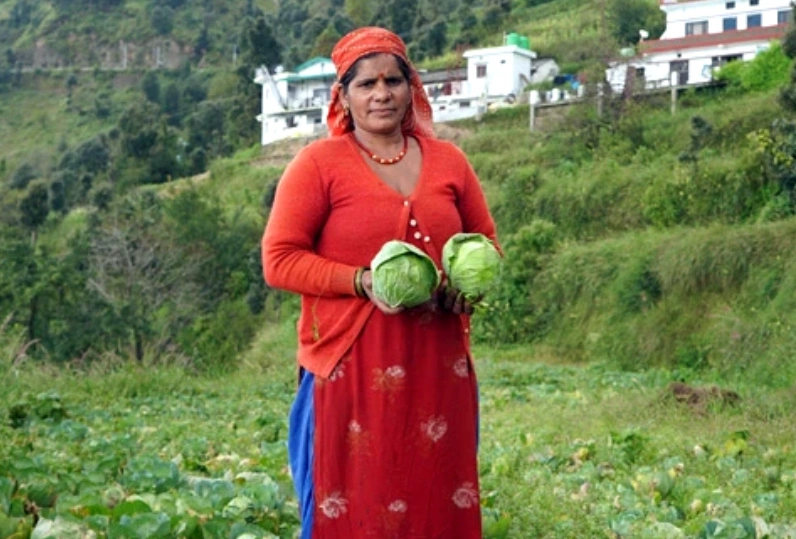
In Jadipani, Uttarakhand, smallholder farmer Reena is not just growing cabbages— she’s growing confidence, community, and a bright...