Introduction
to the Tata Trusts
Know the
work we do
Discover our impact
stories and campaigns
Publications
and reports
In the media
Opportunities
for impact





The pre-adolescent and adolescent years are a critical developmental window marked by rapid growth, changing nutritional needs, and a second major growth spurt that offers an important opportunity to improve nutritional status and support healthy development. In India, this phase is shaped by a triple burden of malnutrition, compounded by socio-economic vulnerabilities such as gender inequities, school drop-out, and early entry into the informal labour market, making it crucial to address both existing nutritional deficiencies and emerging health risks.
The Tata Trusts advance an approach that seeks to improve nutritional status, promote healthy dietary practices and physical activity, and build awareness among children and adolescents, emphasising the role of balanced diets, active lifestyles, and lifelong healthy behaviours in supporting physical and cognitive development, overall well-being, and healthier outcomes into adulthood.
By addressing malnutrition during this critical developmental stage, a key stepping stone to adulthood, these efforts can reduce the future risk of noncommunicable diseases and support healthier life-course transitions.

Integration of Diet Quality to Tackle Anaemia and Optimise BMI
Strengthening school-based nutrition programmes by improving diet quality and dietary adequacy to enhance nutrient intake, address anaemia and support healthy BMI, including through the integration of locally available foods.
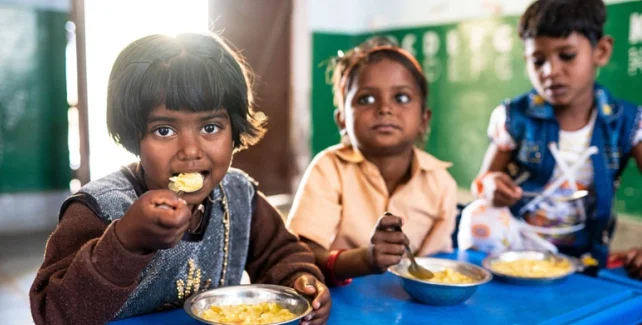
Integrated School-based Approach for NCD Risk Reduction and Adolescent Girls' Health
Developing school-centred models to address behavioural, biological, nutritional, metabolic, and reproductive health risks among adolescents, with a particular focus on adolescent girls, including risks associated with PCOS (Polycystic Ovary Syndrome). The approach will go beyond BMI screening to enable early identification and prevention of NCDs through targeted dietary interventions, awareness, counselling, and behaviour change, alongside integration of screening and care within existing health platforms.