Introduction
to the Tata Trusts
Know the
work we do
Discover our impact
stories and campaigns
Publications
and reports
In the media
Opportunities
for impact





Cancer is one of India's fastest-growing public health challenges. India reported nearly 1.5 million new cancer cases in 2023, and the burden is projected to rise steadily in the coming decades. Yet access to timely diagnosis, quality treatment and supportive care remains deeply uneven. A large proportion of cancer cases in India are diagnosed at advanced stages, when treatment is more complex, outcomes are poorer and costs are significantly higher.
For many patients, especially those living in rural, tribal and underserved regions, the challenge extends beyond the disease itself. Cancer care is not a single intervention but a continuum that requires screening, diagnosis, pathology, imaging, surgery, chemotherapy, radiation, palliative care and long-term follow-up. Accessing these services often means travelling long distances, disrupting livelihoods, exhausting savings and, in many cases, abandoning treatment altogether. As a result, cancer has become one of the leading causes of catastrophic health expenditure and financial distress for Indian families.
The Tata Trusts have played a pioneering role in advancing cancer care in India for over eight decades. The journey began with the establishment of Tata Memorial Hospital in Mumbai in 1941, followed by the Tata Medical Center in Kolkata in 2012 to address critical gaps in cancer care across eastern and north-eastern India. Building on this legacy, the Tata Trusts launched its Cancer Care Programme in 2017 through the Tata Cancer Care Foundation (TCCF), with a vision to make quality cancer care more accessible, affordable and closer to where people live.
At the heart of this effort is a simple belief that geography and income should not determine whether someone receives timely, dignified cancer care. Rather than concentrating care within a few centres of excellence, the Tata Trusts are helping build decentralised and connected cancer care systems that bring services closer to communities. These systems link local facilities with specialised expertise through technology, referral networks and standardised clinical pathways.
Cancer care requires an ecosystem of trained healthcare professionals, diagnostic infrastructure, patient navigation support, financial protection mechanisms, palliative care services and robust data systems. Through partnerships with governments, healthcare institutions and communities, the Tata Trusts work to strengthen each of these dimensions, creating models that are scalable, sustainable and capable of improving outcomes across the entire cancer care continuum.
The Distributed Cancer Care Model is the organising framework for the
Tata Trusts' cancer care work. It seeks to bring quality cancer care closer
to communities through a tiered network of facilities that connect
awareness, screening, diagnosis, treatment, palliative care and followup. Built around the pillars of Access, Quality, Affordability, and
Awareness, Early Detection and Palliative Care, the model combines
local service delivery with specialist expertise, technology-enabled
support and standardised clinical pathways.
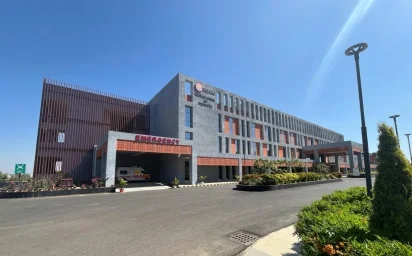
Currently, TCCF operates the Ranchi Cancer Hospital and Research
Centre (RCHRC) in Jharkhand and the Sri Venkateswara Institute of
Cancer Care and Advanced Research (SVICCAR) in Tirupati. The care
network is supported by the Centre for Oncopathology (COP) in
Mumbai, which strengthens the diagnostic backbone of the model by
enabling high-quality cancer pathology, accurate diagnosis and
specialist reference support. The network is expanding across multiple
states through partnerships with governments and healthcare
institutions.
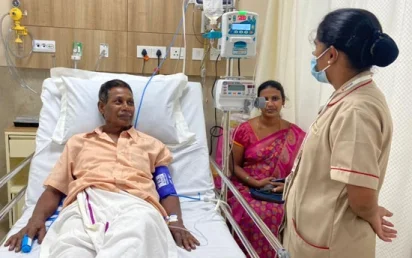
More than 70% of cancers in India are diagnosed at an advanced stage. The Tata Trusts are working to change this through community screening, frontline worker engagement, tobacco control initiatives, healthcare provider training and behaviour change communication. The long-term ambition is to reverse India's current 30:70 early-to-late detection ratio, enabling more cancers to be identified early, when treatment is more effective and outcomes are significantly better.
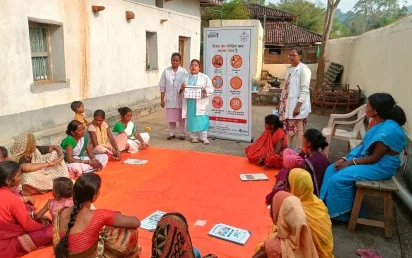
The focus is on strengthening awareness, reducing stigma and encouraging timely care-seeking behaviour through community outreach and public engagement. Initiatives such as 'Gaanth Pe Dhyan' and 'Khud Se Jeet' promote breast and cervical cancer awareness and regular screening for early detection, while community-based programmes delivered through ASHAs, ANMs, NGOs and local leaders help expand screening and referral pathways for common cancers.
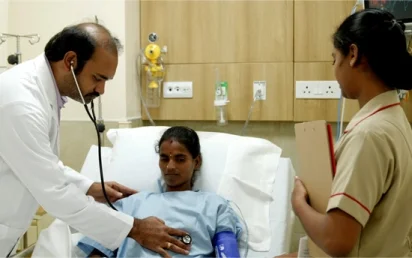
Reducing financial barriers by integrating cancer care within public financing systems. RCHRC is empanelled under Ayushman Bharat Pradhan Mantri Jan Arogya Yojana (AB-PMJAY), while SVICCAR is listed under Andhra Pradesh's Dr. NTR Vaidya Seva scheme, enabling thousands of patients to access treatment with lower out-of-pocket expenditure. Digital tools also support patient management, tracking and continuity of care.
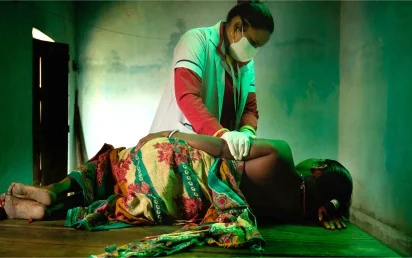
Building long-term cancer care capacity in high-burden and underserved geographies through infrastructure, partnerships and institution-building. In Assam, where cancer incidence is among the highest in the country, the Assam Cancer Care Foundation is developing a statewide network of cancer care centres, complemented by community outreach, screening and awareness programmes.
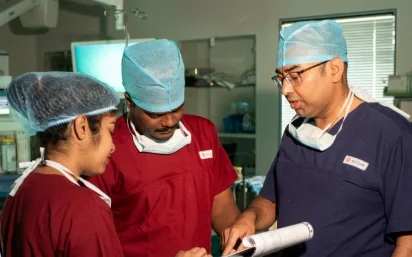
Strengthening the systems that support patients throughout the cancer
journey. This includes training healthcare professionals, standardising
treatment pathways, establishing Hospital-Based Cancer Registries
(HBCRs) to improve clinical decision-making and planning, and
integrating patient navigation, counselling and palliative care services
that support both patients and caregivers.
A critical part of this systems-strengthening approach is diagnostic
capacity. Through the Centre for Oncopathology (COP) in Mumbai, TCCF
supports high-quality cancer diagnostics, including histopathology,
cytology, immunohistochemistry, molecular pathology and specialist
reference services. By strengthening diagnostic precision, COP enables
better staging, treatment planning and clinical decision-making, while
also supporting the larger cancer care ecosystem through expertise,
quality systems and pathology-led capacity building.