Introduction
to the Tata Trusts
Know the
work we do
Discover our impact
stories and campaigns
Publications
and reports
In the media
Opportunities
for impact




While tap water coverage has expanded significantly across rural India, ensuring safe, reliable, and quality drinking water remains a major challenge. Contamination from fluoride, arsenic, iron, salinity, nitrate, and microbiological pollutants continues to affect thousands of rural habitations, compromising the health and well-being of millions.
According to government data, more than 55,000 rural habitations face drinking water quality issues, with arsenic and fluoride remaining widespread concerns in several states. Unsafe drinking water is not merely a service delivery challenge but a significant public health issue, contributing to diarrhoeal diseases and other waterborne illnesses, with children, older adults, and other vulnerable populations bearing the greatest burden.
The Tata Trusts advance this challenge through a risk-based drinking-water service delivery model designed to ensure safe, reliable, and equitable household-level access. Recognising that contamination risks can persist even where infrastructure exists, the programme integrates community-led water quality surveillance, affordable and context-appropriate treatment solutions, strengthened last-mile delivery systems, and technology-enabled monitoring to improve the resilience and consistency of drinking-water services across underserved geographies. This is further reinforced through community-based operation and maintenance models, along with institutional WaSH interventions in schools and health facilities.
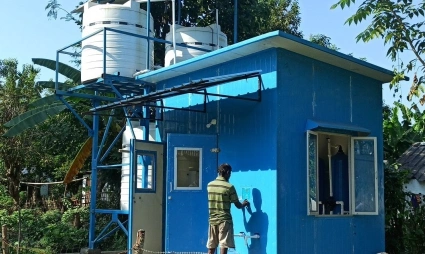
COPS is a flagship intervention under the initiative. It ensures sustainable access to safe drinking water in rural and underserved areas through a decentralized, people-led model. COPS integrates technical assessments, community mobilisation, innovative engineering, and long-term O&M support for effective rural water quality management. Through nanotechnology (Hybrid Ion Exchange), they purify chemical contaminants such as arsenic, iron, fluoride, and salinity. They operate efficiently for up to 8 hours daily, purifying 5,000 litres of water while meeting global safety standards. Powered by solar energy and requiring minimal water for backwash, they offer an environmentally friendly, low-energy solution to persistent water quality challenges.
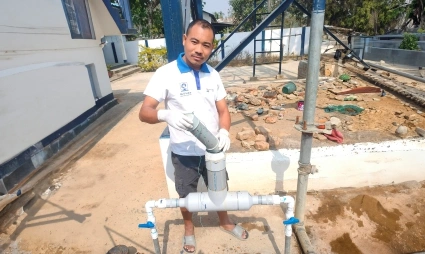
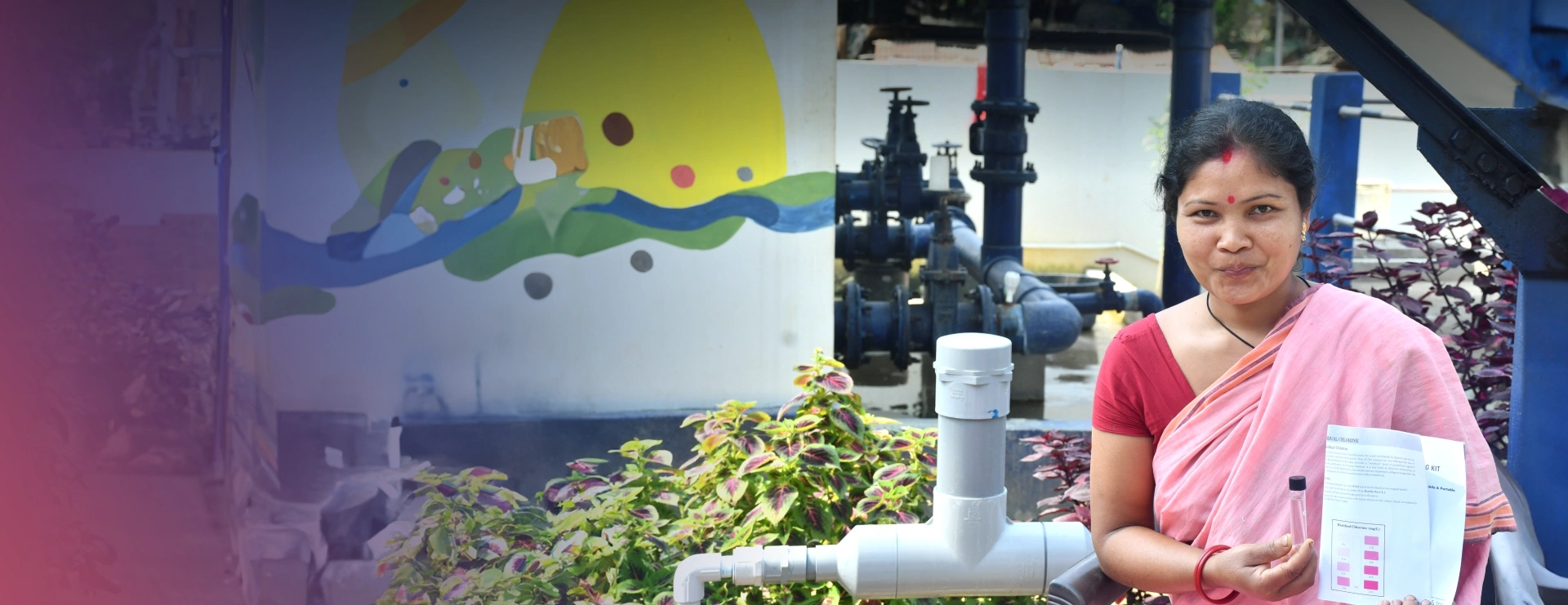
ILC is an in-house innovation by the Tata Trusts. It is a low-cost, gravity-based unit integrated into piped water supply schemes. With no dependency on electricity, it ensures real-time, consistent chlorination, reducing risks of waterborne diseases such as diarrhoea, cholera, and typhoid. ILC system has been vetted by IIT Guwahati for its efficiency, reliability, and scalability in rural water supply systems. Designed for ease of use and suitability in remote settings, the system has been successfully deployed in partnership with state governments in 250+ water supply schemes, benefiting 20,000+ households of Assam, Gujarat, Andhra Pradesh, Tripura, Nagaland, and Uttarakhand states. The Government of Assam, through their Public Health and Engineering Department, is set to roll out the Inline Chlorination System at scale across rural water supply schemes, marking a significant stride toward universal access to safe drinking water. Efforts are also underway to replicate and scale the technology across other states and at the national level.
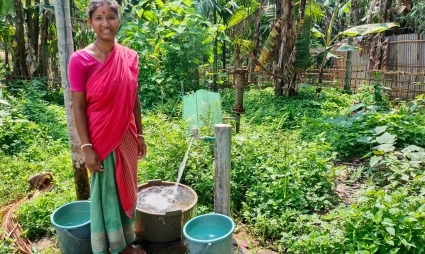
BSF is another low-cost and highly effective household water purification system designed to tackle biological contamination and turbidity. These sand-based filtration systems are easy to maintain, making them a practical and scalable solution for safe drinking water in rural settings. BSFs have been installed in villages of Uttarakhand and Himachal Pradesh where bacteriological contamination is a major challenge.
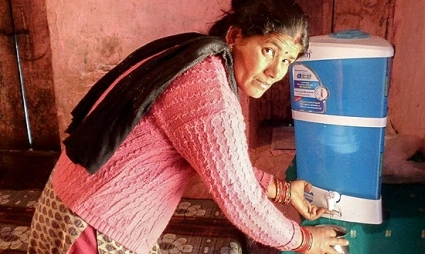
PoUs are portable household-level water purifiers targeting bacteriological contamination. PoUs have been implemented across 13 states including Mizoram, Uttarakhand, Nagaland, and Assam providing safe drinking water to over 30,000 households.
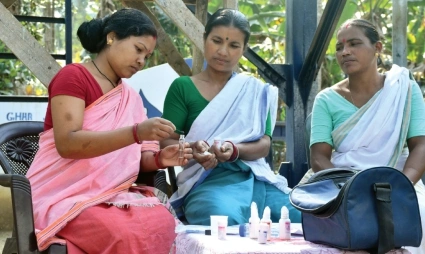
Trained over 5,000 women leaders across 12 states in water quality monitoring and surveillance, empowering them to lead regular testing and treatment efforts in their communities.